
Our Work
At PROACT, our work spans research, evaluation, and advisory engagements that support governments and development partners in designing and delivering effective social and economic initiatives. We work across sectors such as poverty reduction, livelihoods, education, financial inclusion, and institutional strengthening, combining rigorous analysis with on-ground insight. Each engagement is guided by evidence, contextual understanding, and a commitment to improving program outcomes at scale.
2025
2022
2022
2022
2022
2022
2022
2022
2022
2022
2022
2022
01
Zero Poverty

PROACT served as a Technical Support Unit for the Zero Poverty initiative, offering analytical and implementation support to enhance poverty eradication. Its focus has consistently been translating policy into measurable outcomes through data-driven targeting and coordination, addressing livelihoods, employability, financial inclusion, and social protection. PROACT advocates for a holistic approach that promotes sustained income security and long-term household resilience beyond welfare delivery.
02
BC Sakhi Program
PROACT supported the BC Sakhi Program, an initiative under the Uttar Pradesh State Rural Livelihood Mission aimed at expanding financial inclusion in rural and underserved areas. The program trains and certifies women members of Self-Help Groups as Banking Correspondents (“BC Sakhis”), empowering them to deliver essential banking services directly within their Gram Panchayats where formal bank branches are limited or absent. This model not only enhanced access to financial services at the doorstep of rural communities but also fostered women’s economic participation and leadership in local financial ecosystems.

03

Kamgaar
PROACT supported the Kamgaar initiative by providing analytical and implementation support for mapping and profiling informal workers at labour addas. The programme strengthens visibility of the unorganised workforce, improves skill and income mapping, and enables targeted employment linkages and access to social protection schemes.
04
Aasaan
The Uttar Pradesh Department of Urban Development has launched a three-tier collaborative model to accelerate the Namami Gange, AMRUT, and SBM-U missions. By engaging 50 field CSOs for grassroots outreach, 6 Mother CSOs for supervision, and 2 State Support Units for technical monitoring, the state aims to drive unprecedented progress in household water, sewer, and sanitation connections through community-led engagement.

05
Lucknow.Locus

In partnership with New York-based Locus Analytics, this pioneering study utilizes paperless research to map the economic and social intricacies of handloom clusters in Uttar Pradesh. The initiative has earned international acclaim from the World Bank and NABARD for its rigorous primary data collection and deep analysis of indigenous cluster economies. Locus Analytics specifically lauded the research for its exceptional depth, quality, and long-term strategic value.
06
External Monitoring & Concurrent Evaluation (IWMP, UP)
The Uttar Pradesh Department of Urban Development has launched a three-tier collaborative model to accelerate the Namami Gange, AMRUT, and SBM-U missions. By engaging 50 field CSOs for grassroots outreach, 6 Mother CSOs for supervision, and 2 State Support Units for technical monitoring, the state aims to drive unprecedented progress in household water, sewer, and sanitation connections through community-led engagement.

07

Secondary Education
This initiative features baseline and longitudinal studies of secondary education projects supported by the Kusuma Foundation. Focused on improving the low Gross Enrollment Ratio (GER), the research evaluates interventions in vocational education and employability aligned with the Rashtriya Madhyamik Shiksha Abhiyan (RMSA). Using a blend of primary and participatory methodologies, the studies provide data-driven insights to refine project management, promote girls' education, and explore Public-Private Partnership (PPP) models for holistic school improvement.
08
Agricultural credit flow in India
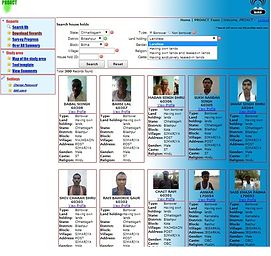
Supported by GIZ Germany, this study conducted by BIRD and PROACT analyzed agricultural credit flow across five Indian states. The project established a modern research paradigm by utilizing an entirely ICT-based methodology, where investigators used internet-equipped notebooks for real-time and offline primary data collection across diverse socio-economic and agro-climatic contexts.

09
Innovation

Supported by WaterAid and the Chief Minister’s Office (CMO) of Uttar Pradesh, this project evaluates an innovative government initiative to raise hand pump platforms in flood-prone and waterlogged regions. Spanning over 2,500 villages across 21 districts, the study marks a rare instance of a government entity refining spot-drinking water technology to ensure climate resilience. PROACT, in collaboration with WaterAid, conducted independent, analytical research to document project outcomes and community impact, providing a sovereign assessment of this first-of-its-kind state endeavor.
10
Special Strategy on MGNREGS
As the State Nodal Agency, PROACT managed a landmark pilot for the Government of Uttar Pradesh to ensure 100 days of MGNREGS employment for one million of the state's most marginalized families. Covering 7,400 Gram Panchayats across 31 districts, the project identified over 1.2 million households—primarily landless, financially excluded, and lacking social security—from 74 specific caste groups. PROACT provided technical assistance and program management to bridge implementation gaps, facilitating the issuance of job cards, employment demand, and timely payments for the poorest rural populations.

11

NextStep
Guided by principles of social justice, Next Step works to empower the most vulnerable communities to build a future free from poverty and inequality. The organization focuses on developing sustainable, local-knowledge-based solutions and influencing national development debates through high-quality, accountable programming. By partnering with local communities, Next Step conceptualizes and implements innovative social development strategies tailored to specific geographic and demographic needs.
12
PACS Programme
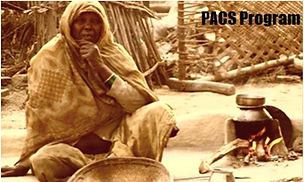
The Poorest Areas Civil Society (PACS) program (2001–2008) was a $25 million DFID-funded initiative targeting India's most impoverished districts through a network of 665 CSOs. Serving as a Supportive Supervision Resource Organization (SSRO), PROACT managed program operations across Uttar Pradesh, Bihar, and Jharkhand, overseeing more than 150 CSOs. Its role involved technical guidance, proposal development, and concurrent evaluation across themes such as local governance, women’s empowerment, and livelihoods. As the longest-serving state-level Resource Organization, PROACT provided critical program management and process documentation to ensure the effective delivery of entitlements and social sector reforms across approximately 60 districts.
.png)
.png)